
Understanding Hearing Loss
Hearing loss is a medical condition in which the auditory process and one’s hearing abilities are compromised. Hearing loss ranges in degrees of severity, from mild to profound. It also takes on different configurations (bilateral or unilateral, for example), and may make it difficult to register certain frequencies.
Prevalence of Hearing Loss
As the third most common medical condition in the United States, following heart disease and arthritis, hearing loss affects 20% of the population or 48 million Americans. While hearing loss affects anyone at any age, it does disproportionately affect older Americans. Approximately one in three people over the age of 65 and 50% of people over the age of 75 experience some degree of hearing loss. An estimated 60% of the American workforce experiences some degree of hearing loss, as well as 60% of veterans returning from combat zones.
Types & Causes of Hearing Loss
There are three types of hearing loss: conductive, sensorineural, or mixed. Conductive hearing loss is related to the outer and middle ear, ear canals and bones. Sensorineural hearing loss is related to the inner ear and often occurs due to damage to inner ear hair cells. Damage to these cells prevents sound from being translated into electric signals which then fail to be delivered to the brain to be processed as sound. Mixed hearing loss is a combination of the previous two forms, affecting various areas of the ear simultaneously.

may be caused by: issues with the middle ear, ear infections, or otosclerosis; head injury; birth defects; impacted ear wax, ear infection, or other diseases.
may be caused by exposure to loud sound, presbycusis (age-related hearing loss), hereditary/genetics, head injury, ototoxic medications (drugs that damage inner ear hair cells), illnesses (measles, mumps, meningitis, Meniere’s), or tumors in the auditory pathway.
Identifying & Treating Hearing Loss
Because it is an invisible condition, hearing loss is not immediately detected and often times, people grow accustomed to living with diminished hearing abilities. The Hearing Loss Association of America reports that people tend to wait an average of seven years from the time they first experience changes in their hearing until they take a hearing test and seek treatment. Leaving hearing loss untreated could lead to a number of negative consequences.
People with untreated hearing loss have been found to have lower earning power in the workplace compared to colleagues with normal hearing or colleagues who treat their hearing loss with hearing aids.
This could be due to the fact that hearing loss interferes with our ability to communicate, and the heavier cognitive load placed on our brains makes it difficult to concentrate. Untreated hearing loss has also been linked to decreased personal safety, with a higher number of people with untreated hearing loss being hospitalized for falls or accidents.
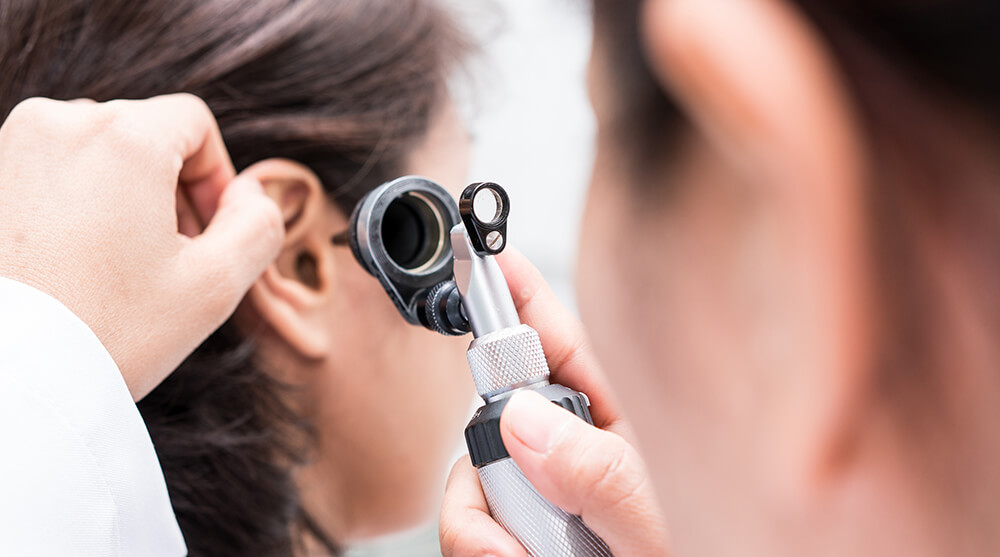
If you believe that you, or someone you love, is experiencing hearing loss, the first step is to take a hearing test. Hearing tests gauge your current hearing abilities and provide crucial information on your hearing heath. Hearing loss is most commonly treated with the prescription of hearing aids customized to treat your specific configuration and degree of hearing loss. If a hearing loss is detected, we’ll work with you to find the best hearing solution to treat your needs.